IT & Infrastructure context
- ITSM
- Monitoring
- Cloud Platforms
- Identity & Access
- Device Management
Operations
Production-grade AI agents that connect systems, workflows, data, and operational knowledge to help teams reduce manual work, respond faster, prevent issues, and scale execution without adding headcount at the same pace.
Production-grade · Human-controlled · Built on your existing stack
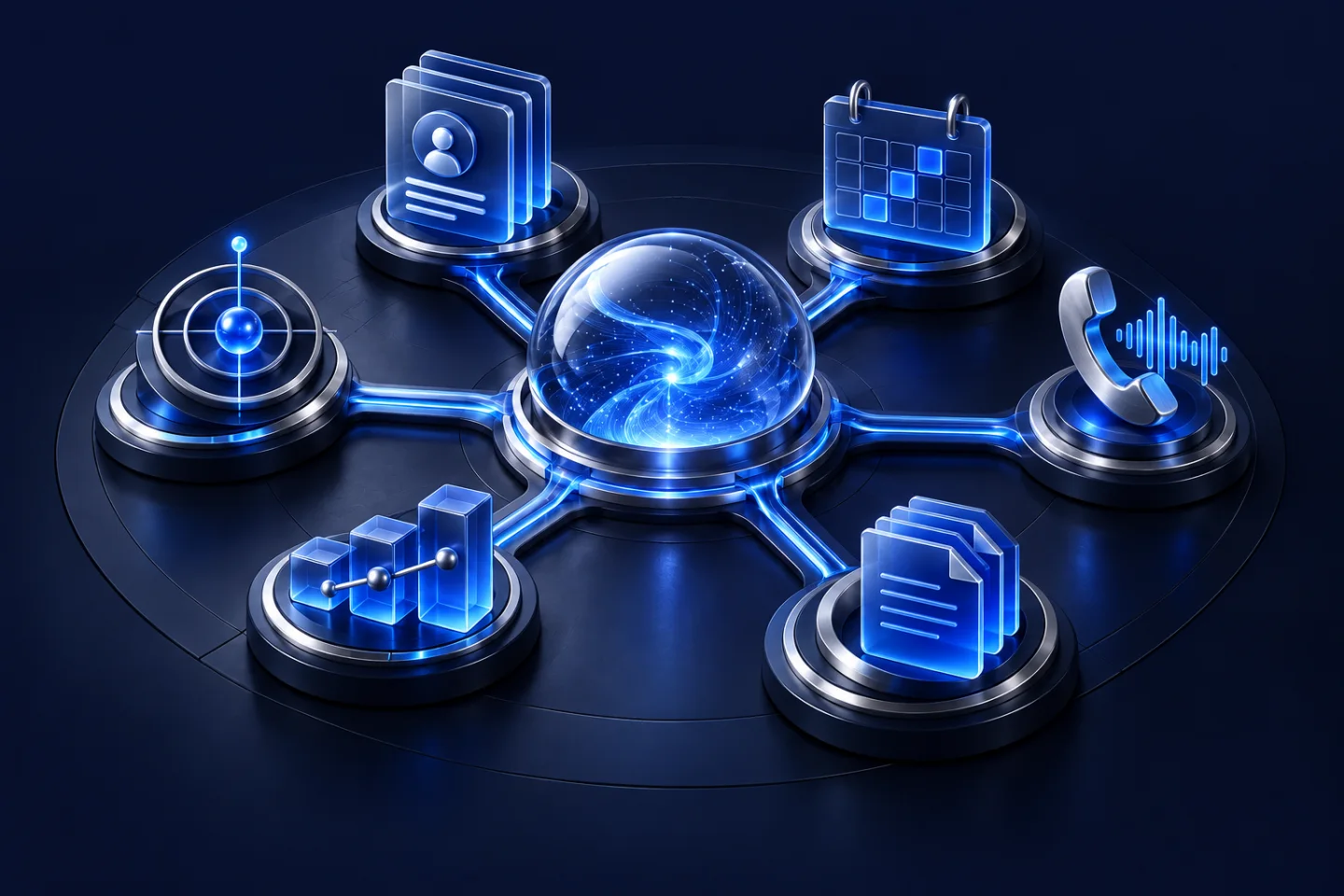
Shared operational context for every agent, workflow, and decision. Your existing systems remain the source of truth. The AI layer connects the signals, workflows, rules, and actions around them.

From Reactive Work to Proactive Operations
Bring together signals across systems, teams, tickets, and processes into one current operating view.
Detect unusual events, prioritize what matters, identify likely causes, and prepare the next action.
Automate repetitive operational work across tickets, requests, approvals, documentation, and recurring procedures.
Coordinate people, systems, vendors, and tasks around defined SLAs and customer outcomes.
Identify bottlenecks, repeated failure points, unnecessary handoffs, and opportunities for automation.
Use operational outcomes and human feedback to improve workflows, runbooks, and agent behavior over time.
The Operations operating layer
A connected operating layer across your operations function.
Shared operational context
Representative examples we build for operations teams
A connected operating layer across your operations function.
Combines operational signals and business context into a decision-ready view.
Identifies anomalies, recurring patterns, and operational risks early.
Combines operational evidence to help isolate likely causes faster.
Classifies, prioritizes, and routes requests with the needed information.
Executes approved remediation, prepares fixes, or triggers playbooks.
Coordinates multi-step processes across systems, teams, approvals, and vendors.
Tracks service commitments and escalates exceptions before deadlines are missed.
Turns procedures and historical resolutions into executable workflows.
Captures incident and project changes in updated operational documentation.
Analyzes recurring work and failure patterns to identify automation opportunities.
Surfaces infrastructure inefficiencies, recurring costs, and optimization opportunities.
Coordinates monitoring, triage, remediation, documentation, and escalation across IT.
Coordinates agents, sequences, state, exceptions, and actions.
Makes systems, processes, incidents, owners, and operational knowledge available across workflows.
Applies approved logic, operating procedures, and decision criteria.
Evaluates accuracy, relevance, completeness, usefulness, and alignment with operating procedures.
Defines where people approve, edit, override, or make the final decision.
Controls permissions, automation levels, write-back, quality thresholds, and expansion.
Actions can run automatically, request review, or pause for an exception based on policy and available evidence.
Combines system signals, service data, tickets, and business context into one decision-ready view.
Identifies anomalies, recurring patterns, and potential operational risks before they become larger problems.
Brings together logs, recent changes, incident history, dependencies, and known issues to help teams isolate likely causes faster.
Classifies incoming requests, prioritizes them, gathers missing information, and routes them to the right workflow or owner.
Executes approved remediation steps, prepares recommended fixes, or triggers defined operational playbooks.
Coordinates multi-step operational processes across systems, teams, approvals, and external vendors.
Tracks service commitments, identifies risk of breach, and escalates exceptions before deadlines are missed.
Turns operational procedures and historical resolutions into guided, executable workflows.
Captures what changed during incidents and projects and turns it into updated operational documentation.
Analyzes recurring work, handoffs, delays, and failure patterns to identify the next automation opportunity.
Surfaces infrastructure inefficiencies, recurring operational costs, and opportunities for automation or consolidation.
Coordinates monitoring, triage, remediation, documentation, and escalation across the IT environment.
Operations users and outcomes
IT 2.0
Traditional IT spends a large share of its capacity reacting: Tickets arrive. People investigate. Teams coordinate. Issues are resolved. Documentation is updated later. IT 2.0 changes the operating model. Agents continuously monitor, interpret, prepare, execute, and escalate inside clearly defined boundaries. The result is a shift from reactive IT to proactive, increasingly automated operations.
Identify issues, anomalies, and recurring patterns earlier.
Bring together the relevant technical and business context.
Execute approved operational tasks and playbooks automatically.
Bring people in where judgment, risk, or ambiguity requires them.
Capture what happened and improve the next response.
90-Day Agentic Transformation
For selected organizations, we structure the transformation as a focused 90-day program.
Map the environment, identify operational friction, and strengthen the core infrastructure and control model.
Deploy agents into high-frequency operational workflows where manual work can be safely reduced.
Track time returned, cost reduction, response speed, quality, and operational impact.
Use the capacity and savings created by automation to fund the next stage of the transformation.
Expand the agentic operating model across additional IT and business operations workflows.
Let the Transformation Help Fund Itself
One of the most powerful ideas in the IT 2.0 model is that transformation should create capacity early. Reduce repetitive work. Return hours to the team. Lower operational cost. Improve response and resolution times. Then reinvest part of that value into the next wave of automation. Optimize → Save → Reinvest → Expand That changes AI transformation from a pure cost center into a compounding operating model.
From Tickets to Autonomous Workflows
The biggest operational gains come when AI moves past answering questions and begins participating directly in the workflow.
A ticket, alert, request, or operational event enters the system.
The agent gathers the relevant data, system state, history, policy, and dependencies.
Rules and reasoning determine the appropriate path.
Approved actions happen automatically where the risk profile allows it.
People receive the context, evidence, and recommended next action.
The resolution becomes part of the future operating context.
Scale the Knowledge of Your Best Operators
Your best operators possess years of experience, pattern recognition, and judgment that traditional systems struggle to capture. They know which alerts matter, how failures are connected, which actions are safe, and how to prevent problems before they escalate. We transform that expertise into shared operational intelligence, intelligent runbooks, and AI agent workflows, enabling the entire organization to make better decisions, resolve issues faster, and continuously improve. Expert knowledge → shared intelligence → agentic execution → stronger operations
Primary Users & Outcomes
Users CIO / CTO IT Leadership Infrastructure Teams Service Operations Security Operations Business Operations COO Operations Managers
Reduce the time between signal, understanding, and action.
Automate repetitive operational work and reduce manual coordination.
Let teams support more work without growing headcount at the same rate.
Use incident history and process intelligence to eliminate repeated failure patterns.
Track, prioritize, and escalate work more consistently.
Identify risks and issues before they become critical.
Turn tribal knowledge into reusable systems.
Where Could Your Operations Team Turn More Signals Into Faster Action?
IT support. Incident response. Service delivery. Infrastructure operations. Procurement. Workflow coordination. Knowledge management. Process automation. We’ll map the workflow, connect the relevant systems and knowledge, and define the first production AI agents needed to create measurable operational impact.
The Operations Operating Layer
Connected systems. Shared operational context. Coordinated agents. Clear human control.
Systems, incidents, processes, owners, dependencies, and priorities remain connected.
Agents understand what should happen next, who owns it, and what rules or approvals apply.
Runbooks, procedures, architecture, policies, and historical incidents become reusable operational intelligence.
Routine work can be automated while ambiguous or high-risk cases are escalated to people.
Every incident, resolution, approval, and outcome improves the next cycle.
How We Work

Choose one high-value operational process. Map the systems, data, runbooks, owners, dependencies, exception paths, and success criteria.
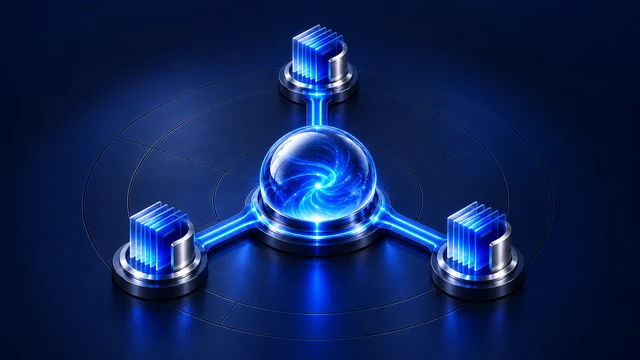
Connect shared operational context and activate additional agents on top of the same foundation.
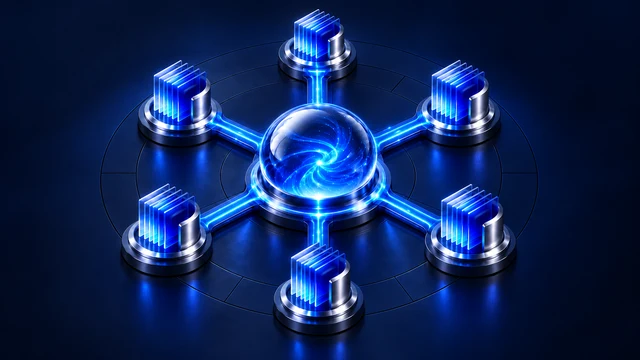
Measure outcomes, refine the workflows through real operational feedback, and increase automation as quality and trust are proven.
Human + Machine, One Intelligence.
AI agents monitor, classify, coordinate, prepare, and execute. People handle ambiguity, high-impact decisions, exceptions, and strategic priorities.
Automation is conditional. The action, its sources, and the team’s policy determine what happens next.
Check that the source is relevant, current, and sufficient for this action.
Within policy and grounded in approved context.
Proceed within the agreed boundaryA person is required for this action or audience.
Route to the right ownerEvidence is missing, conflicting, or outside policy.
Pause and surface the exceptionInsufficient source? Pause the action, surface what is missing, and send the case for resolution.
A system design example. Review is required only when the action or policy calls for it; source failures follow an exception path.
Build an Agentic Operations Function
Tell us the operational workflow you want to transform. We’ll map the opportunity, connect the relevant systems and knowledge, and build the first production AI workflow around measurable business impact.